Peony Root Extract (Paeoniflorin): Cosmetic Supplier Checklist
Peony root extract, standardized to paeoniflorin, is used in cosmetics for soothing and skin-conditioning claims. When you source it, the two things to verify first are the paeoniflorin assay on the batch-specific COA and the heavy-metal/microbiology results. This checklist covers the specifications, documents, and supplier questions that keep the buying process short and the paperwork usable for your product file.
What Is Peony Root Extract?
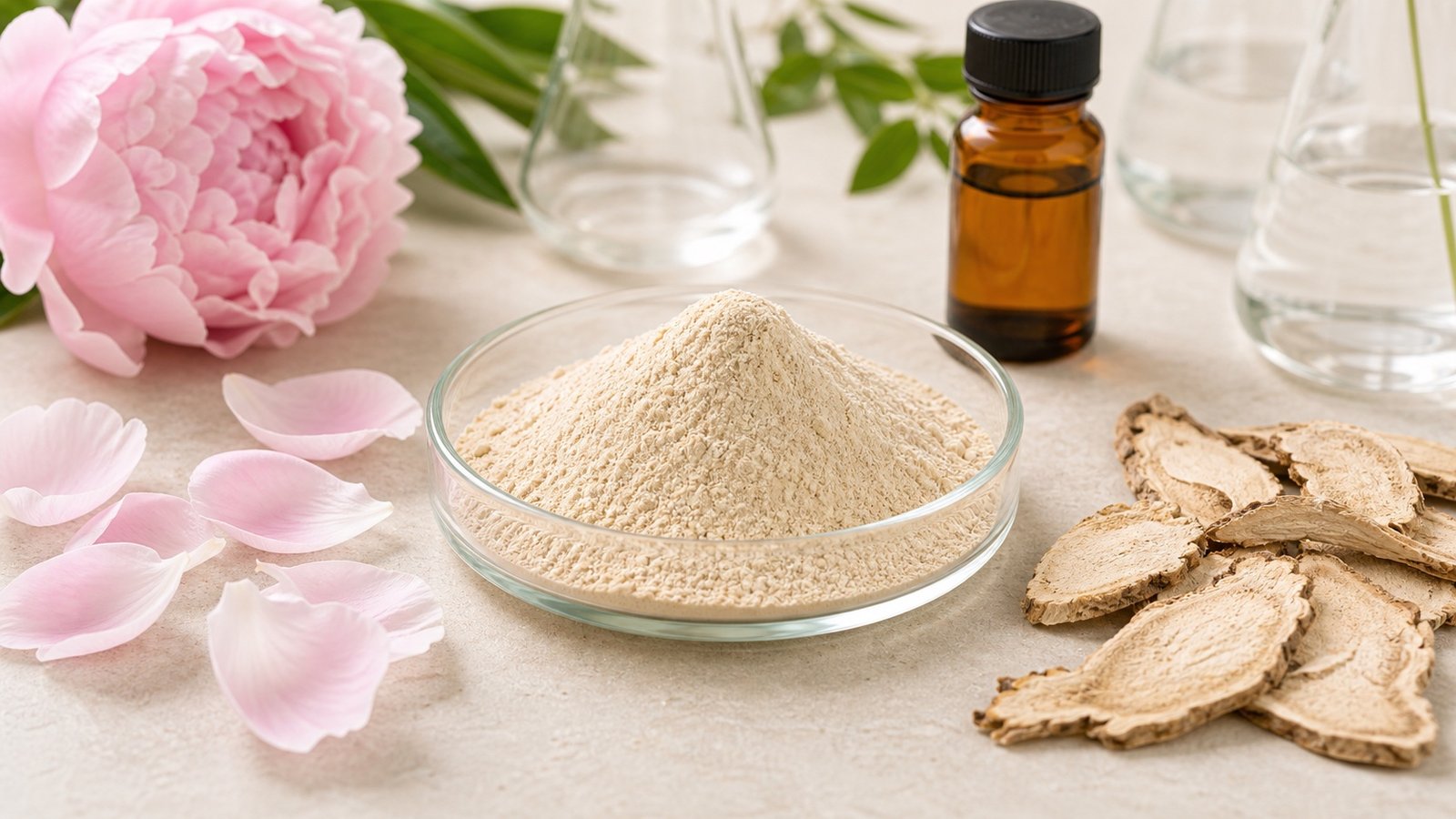
Peony root extract is made from the roots of Paeonia lactiflora Pall. In cosmetic ingredient lists it is usually shown as Paeonia Lactiflora Root Extract. The compound buyers most often standardize on is paeoniflorin, a marker that appears alongside polyphenols and botanical sugars in the root.
Common Specifications
Typical commercial grades include ratio extracts (commonly 10:1) and paeoniflorin-standardized grades. Standardized levels vary by supplier — commonly seen examples range from low-single-digit to 80%+ paeoniflorin, so the correct choice depends on your use level and claim.
- 10:1 root extract: input-ratio concentration; paeoniflorin content should still be stated on the COA for each batch.
- Paeoniflorin-standardized powder: assayed marker level, suitable when consistency matters.
- Appearance: typically a light yellow to brown fine powder; confirm color and odor acceptance for your formula.
- Solubility: water-dispersible in standard grades; clarity depends on concentration, so test in your system.
- Use level: commonly 0.1%–2.0% depending on extract strength and product positioning.
Quality-Control Checklist
Ask for these items on the batch-specific COA:
- Paeoniflorin assay (method, e.g., HPLC) and botanical identity (species name).
- Heavy metals (lead, arsenic, cadmium, mercury) with limits.
- Microbiology (total plate count, yeast/mold, pathogens).
- Pesticide residue status and solvent residue if applicable.
- Color, odor, and loss on drying.
Supplier Documentation to Collect
- Batch-specific COA matched to the lot you receive, plus MSDS/SDS.
- Origin and botanical identity documentation.
- Certifications relevant to your market: organic (USDA/EU), halal, kosher, non-GMO, GMP/ISO 22716.
- Regulatory checks for your target market, including California Prop 65 screening and EU ingredient naming.
Questions to Ask Before Buying
- What is the extraction solvent and plant part used?
- Is the COA batch-specific, and can you share a recent example?
- What paeoniflorin levels can you supply, and what is the typical batch range?
- What are the heavy-metal and pesticide limits for the cosmetic grade?
- What is the MOQ, sample size, and lead time?
- Which certifications can be documented for export to the EU and US?
FAQ
What is paeoniflorin?
Paeoniflorin is a monoterpene glycoside found in peony roots and the marker most commonly used to standardize peony root extract for cosmetics. Confirm the assay method on the COA because levels can be reported against different methods.
Is white peony root extract the same as peony root extract?
Both come from Paeonia species; white peony usually refers to Paeonia lactiflora root. Confirm the species and plant part on the specification sheet for your ingredient file.
What documents do EU/US brands need from an ingredient supplier?
At minimum, a batch-specific COA, MSDS, origin documentation, and any certifications claimed (organic, halal, kosher, GMP/ISO). Finished-product compliance (e.g., EU cosmetic product safety report or US labeling) is the brand’s responsibility, but the supplier’s documentation should support it.
Can I test the extract in my formula before ordering bulk?
Yes — request a sample with its COA, run your formulation and stability check, and confirm color/solubility acceptance before placing a bulk order.
Request a peony root extract sample and review the paeoniflorin grades and COA documentation before you buy.
Related Guides
- Peony Root Extract product page — paeoniflorin grades and MOQ
- Cosmetic Ingredients catalog
- US & EU botanical extract compliance guide
Time-to-Market Calculator: Pre-made Bases vs. Traditional OEM
| Development Phase | Estimated Days |
|---|---|
| Total Time-to-Market | |
| Minimum Order Quantity (MOQ) |