What Is a COA? A Supplement Brand’s Guide to Certificates of Analysis

Quality & Compliance 6 min read

What Is a COA? A Supplement Brand’s Guide to Certificates of Analysis

If you’re sourcing botanical ingredients for a supplement or cosmetic product, you’ll hear the term COA constantly. But what exactly is a Certificate of Analysis, what should it contain, and how do you know if the one you’ve been given is trustworthy? This guide explains everything you need to know.

📄
BotaNexus Team
Botanical Ingredient Sourcing Specialists · Guangzhou, China

1. What is a Certificate of Analysis?

A Certificate of Analysis (COA) is a document issued by a manufacturer or testing laboratory that summarizes the test results for a specific batch of a product. For botanical extract ingredients, the COA confirms that the batch has been tested and meets the defined specification for that product.

Think of it as the quality passport for an ingredient. Just as a passport confirms a person’s identity and that they’ve been verified by an authority, a COA confirms the ingredient’s identity, composition, and purity — and that these have been measured and recorded.

In the supplement and cosmetic ingredient industry, the COA is the single most important quality document. Before you use any botanical extract in a formula, you should have a COA for that specific batch of ingredient. It’s also the document your contract manufacturer, quality auditor, and regulatory advisor will ask for if they need to verify the ingredient you’re using.

Key point: A COA is batch-specific. A COA issued for Batch #001 does not apply to Batch #002. Always request the COA for the specific batch you’re receiving.

2. What a COA should contain

A properly formatted COA for a botanical extract ingredient should include the following elements. Any COA that’s missing multiple items from this list should be treated with caution.

Product name
The commercial name of the extract (e.g. “Ashwagandha Root Extract 5% Withanolides”)
Botanical / Latin name
The scientific name (e.g. Withania somnifera). Confirms species identity.
Part used
Root, leaf, fruit, seed, etc. Different plant parts have different active compound profiles.
Batch number
Unique identifier for the production batch. Must match the batch you receive.
Manufacturing date
When the batch was produced. Used to verify shelf life and freshness.
Expiry / Best before date
Shelf life for the ingredient. Typically 2–3 years for most dried botanical extracts.
Active compound & %
The key quality indicator. E.g. Withanolides ≥5.0%, EGCG ≥50%, Curcuminoids ≥95%.
Heavy metals
Lead, arsenic, mercury, cadmium results in ppm or μg/g. Essential for US/EU compliance.
Microbiology
Total plate count, yeast/mold, E. coli, Salmonella. Confirms the ingredient is safe to consume.
Appearance & physical
Color, odor, particle size, moisture content. Basic quality indicators.
Issuer signature / stamp
QC department signature and company stamp. Confirms the document is official.

3. How to read a COA for botanical extracts

Reading a COA for the first time can feel technical. Here’s how to approach it systematically, focusing on the parameters that matter most.

Start with the active compound

The active compound percentage is the single most important line on the COA for a botanical extract. This is the parameter that defines the product’s potency and determines whether it will deliver the expected effect in your formula.

For example, if you’re sourcing berberine HCl and the specification is 97% purity, the COA should show a test result of ≥97% berberine content. If it shows 89%, the batch doesn’t meet specification — regardless of what the supplier claims on their website or product listing.

Common active compounds to look for by ingredient category:

Ingredient
Active compound to check
Ashwagandha extract
Withanolides (2.5%, 5%, or KSM-66 spec)
Turmeric extract
Curcuminoids (95%)
Green tea extract
EGCG (40%–98%)
Ginkgo biloba
Flavone glycosides 24%, terpene lactones 6%
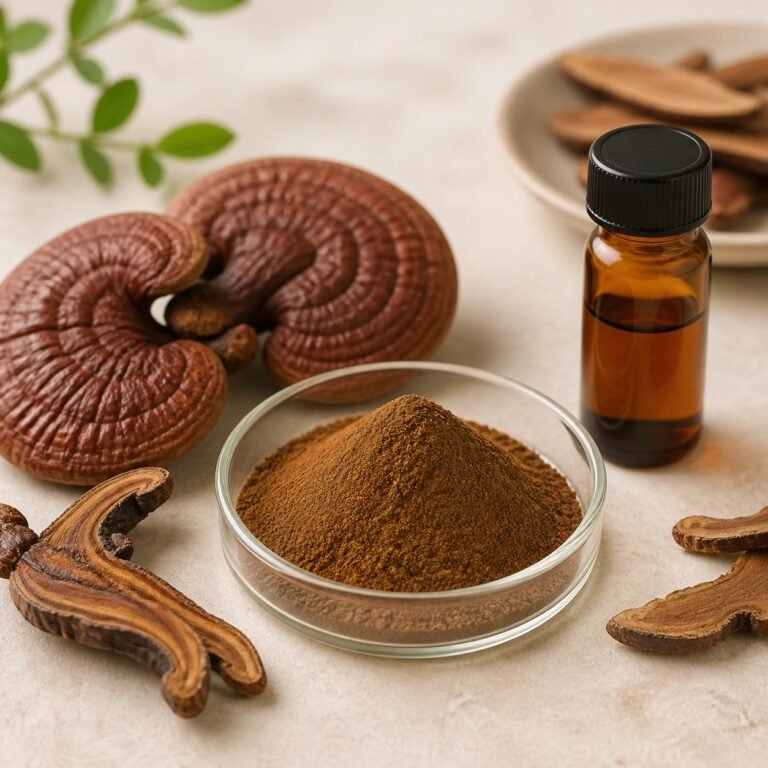
Reishi mushroom
Polysaccharides (30%+)
Berberine HCl
Berberine content (97%+)

Check the heavy metals section

Heavy metal results are reported in ppm (parts per million) or μg/g. For the US market, compare the lead result against California Prop 65 limits — we’ll cover this in more detail in Section 6. For EU cosmetic ingredients, check against EC 1223/2009 maximum limits.

The four metals to check are lead (Pb), arsenic (As), mercury (Hg), and cadmium (Cd). A well-formatted COA will show both the specification limit (e.g. “≤3 ppm”) and the actual test result (e.g. “0.8 ppm”).

Verify the batch number matches your shipment

When your ingredient arrives, check that the batch number on the physical packaging matches the batch number on the COA. This sounds obvious, but it’s a step many buyers skip — and it’s the only way to ensure the COA you reviewed actually applies to the ingredient you received.

4. Red flags: signs a COA may not be trustworthy

Not all COAs are created equal. Here are the warning signs that a COA may be unreliable or fraudulent.

🚩
No active compound data

A COA that only shows appearance, color, and organoleptic properties without active compound testing tells you almost nothing about product quality. For a botanical extract, active compound percentage is the primary quality indicator.

🚩
Round numbers that exactly match the specification

Real analytical results are rarely perfect round numbers. If a COA shows lead = exactly 0.5 ppm (the Prop 65 limit), or curcuminoids = exactly 95.0% (the specification), this is suspicious. Real test results typically show values like 0.34 ppm or 95.7%.

🚩
No batch number or a generic batch number

A COA without a batch number, or with a placeholder like “2024” or “Sample” as the batch identifier, suggests the document may be a template rather than a genuine batch-specific test record.

🚩
Results that seem too good

If every parameter on the COA is right at or just inside the specification limit — and all the heavy metal results are exactly at the minimum detectable level — the data may have been fabricated or manipulated.

🚩
Unwillingness to share the COA before ordering

A reputable supplier will share the COA and specification sheet before you place any order. Reluctance to share documentation until after payment is a serious red flag.

5. Factory COA vs. third-party test report

There’s an important distinction between a factory-issued COA and a third-party laboratory test report. Understanding this difference helps you assess how much confidence to place in the documentation you receive.

🏭 Factory COA

Issued by the factory’s internal quality control department. The factory tests their own product and issues the document themselves.

Provided with every order at no extra cost
Batch-specific and up to date
Self-reported — not independently verified
Quality of internal testing varies widely

🔬 Third-Party Test Report

Issued by an independent accredited laboratory (SGS, Eurofins, Intertek, etc.) that has no financial relationship with the factory.

Independently verified — highest credibility
Accepted by regulatory bodies globally
Required for premium supplement brands
Additional cost ($150–400 per test)

For most ingredient purchases, a factory COA from a reputable supplier is an acceptable starting point. For high-stakes ingredients — expensive actives, ingredients used at high doses, or ingredients with tight Prop 65 margins — a third-party test report provides an essential additional layer of verification.

At BotaNexus, we work with SGS and Eurofins to provide third-party test reports for ingredients where independent verification adds meaningful assurance. These are available on request, and we recommend them for any new ingredient before scaling to larger order quantities.

6. Using the COA to check Prop 65 compliance

California’s Proposition 65 requires businesses to provide warnings before knowingly exposing anyone to chemicals that are known to cause cancer, birth defects, or other reproductive harm. Heavy metals — particularly lead — are the most common Prop 65 compliance issue for botanical extract ingredients.

To check whether an ingredient meets Prop 65 requirements, you need to calculate the daily exposure to lead based on the COA result and your product’s serving size.

⚠ Prop 65 Lead Safe Harbor Level

The safe harbor level for lead (as a reproductive toxin) is 0.5 μg per day. This means the total lead exposure from a daily serving of your finished product must be below 0.5 μg to avoid a Prop 65 warning requirement.

How to calculate:

Lead exposure (μg/day) = Lead in COA (ppm) × Daily serving size (g)

Example: COA shows lead = 1.2 ppm. Daily serving of this ingredient = 300mg (0.3g). Lead exposure = 1.2 × 0.3 = 0.36 μg/day. This is below the 0.5 μg threshold — Prop 65 warning not required for this ingredient at this dose.

Note that this calculation applies to each individual ingredient in your formula. If you’re combining multiple botanical extracts, the total lead exposure across all ingredients at their respective serving sizes must remain below 0.5 μg/day to avoid a warning requirement. For complex multi-ingredient formulas, consult a regulatory specialist for a full Prop 65 assessment.

7. COA checklist before you order

Use this checklist every time you review a COA for a new ingredient or a new batch from an existing supplier.

Summary

A Certificate of Analysis is not just a piece of paperwork — it’s your primary tool for verifying ingredient quality, confirming compliance with market regulations, and protecting your brand. Every botanical extract you use in a formula should have a batch-specific COA that you’ve reviewed and retained.

The most important things to check are the active compound percentage, heavy metal results (especially lead for the US market), microbiology, and the batch number. For high-stakes ingredients, supplement this with a third-party test report from an accredited laboratory.

Need a COA for a botanical ingredient?

Every ingredient we supply comes with a full COA, MSDS, and spec sheet. Third-party SGS and Eurofins test reports are available on request.

Request a Sample →

Similar Posts

Leave a Reply

Your email address will not be published. Required fields are marked *