Centella Asiatica Extract for Skincare: Sourcing Guide
Centella asiatica extract — often called cica or gotu kola extract — is one of the most requested botanical actives for skincare formulas. Before you source it, you need to decide which grade fits your product: a 10:1 whole-plant extract, a standardized total-triterpene grade, or a purified asiaticoside or madecassoside. This guide explains the specifications to compare, the documents to request, and the questions to ask a supplier so your COA matches your label claim.
What Is Centella Asiatica Extract (Cica)?
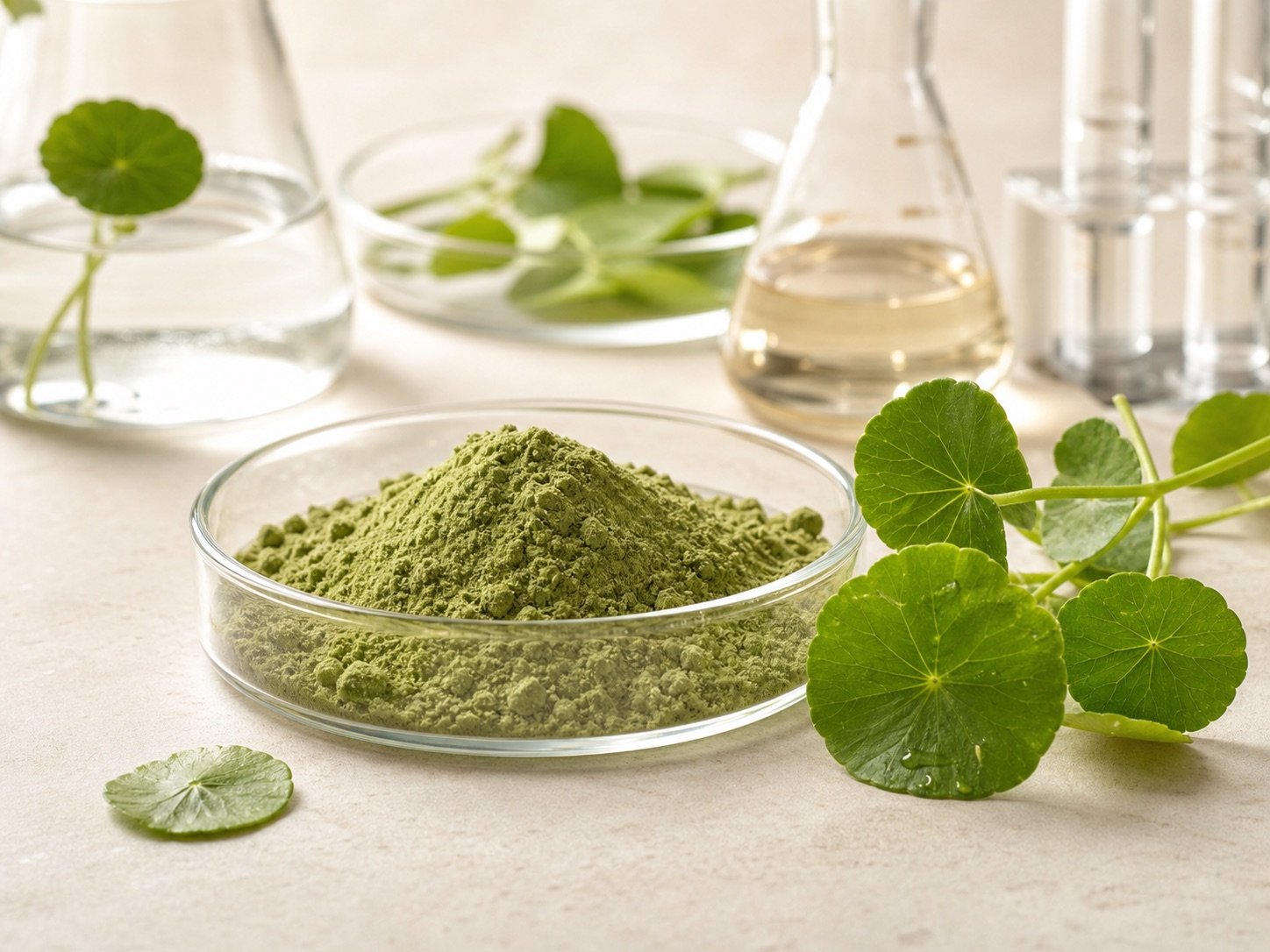
Centella asiatica (L.) Urb., known in cosmetics as cica, gotu kola, tiger grass, or Indian pennywort, is a creeping herb used in skincare for soothing and barrier-support claims. In ingredient lists it typically appears as Centella Asiatica Extract or Centella Asiatica Leaf Extract, depending on the plant part and grade used.
The main actives buyers track are asiaticoside, madecassoside, asiatic acid, and madecassic acid — the four compounds commonly reported as “total triterpenes.” A COA for a standardized grade should state which marker was assayed and the method (HPLC is common).
Common Specifications and How to Choose
Centella extract is sold in a few broad categories. Typical commercial grades include:
- Ratio extracts (e.g., 10:1): concentrated from a defined quantity of raw herb; marker content is not fixed and can vary by batch.
- Standardized total-triterpene grades (e.g., 20% or 40%): assayed against a defined marker group; the common choice when a formulator wants a consistent active level.
- Purified markers (e.g., madecassoside 90%, asiaticoside 95%): high-purity actives used at low levels (often 0.1% or below) in premium serums and ampoules.
- Liquid grades: available on request for water-based systems; solubility and stability must be tested in your formula.
Common use levels for standard extracts are roughly 0.1%–1.0%; purified actives are typically used lower. Always confirm the recommended use level and solubility with the supplier and validate in your own formula.
Documents to Request Before You Order
- Batch-specific COA: identity, assay (marker and method), appearance, loss on drying, heavy metals, and microbiology for the batch you receive.
- MSDS/SDS and allergen statement.
- Country-of-origin and botanical identity documentation (e.g., certificate of origin, species name on the COA).
- Certifications relevant to your market and claim, such as organic (USDA/EU), halal, kosher, non-GMO, and GMP or ISO 22716 for cosmetics manufacturing.
- Regulatory notes for your target market (e.g., Prop 65 consideration for California, EU cosmetic ingredient naming under the INCI nomenclature).
Questions to Ask a Centella Extract Supplier
- Which plant part and extraction solvent were used (water, ethanol, or other)?
- Is the COA batch-specific and does it match the exact lot you will receive?
- What assay method is used, and what is the typical batch-to-batch range?
- What are the heavy-metal and pesticide specifications for the cosmetic grade?
- What is the MOQ for powder and liquid grades, and what are typical lead times?
- Can you supply documentation needed for the EU or US market (e.g., INCI name, origin, GMP/ISO certification)?
FAQ
Is centella asiatica extract the same as cica extract?
Yes — “cica” is the common name for Centella asiatica in skincare. Confirm the INCI name on the product specification, because different suppliers may use leaf, whole-plant, or callus-derived versions.
What is the difference between 10:1 extract and standardized triterpenes?
A 10:1 ratio extract is concentrated by input ratio and its marker content can vary. A standardized grade is assayed to a defined marker level (e.g., 40% total triterpenes) so the active content is consistent across batches.
Do I need a madecassoside 90% grade for my serum?
Not necessarily. Standardized total-triterpene grades are sufficient for many formulas; purified markers are used when a label claims a specific compound and the formula is built around it. Review the target use level and cost per kilo before deciding.
Can you get a sample before bulk ordering?
Yes — request a sample and a batch-specific COA for the sample lot, then run your own formulation and stability checks before committing to bulk.
Request a centella asiatica extract sample to review specifications, COA, and documentation for your market.
Related Guides
- Centella Asiatica Extract product page — specifications and bulk grades
- Cosmetic Ingredients catalog — other botanical actives for skincare
- US & EU botanical extract compliance guide
Time-to-Market Calculator: Pre-made Bases vs. Traditional OEM
| Development Phase | Estimated Days |
|---|---|
| Total Time-to-Market | |
| Minimum Order Quantity (MOQ) |