Mushroom Extract vs Mushroom Powder: Sourcing Guide for Brands
Mushroom extract and mushroom powder are different products with different costs, active levels, and label implications. Powder is dried mushroom ground directly; extract is concentrated from the mushroom through water or ethanol extraction and is usually standardized to polysaccharides or beta-glucans. For a supplement brand, the choice depends on your dosage form, margin, and claim — not on which one is “better” in general. This guide compares them and lists what to check when sourcing.
Mushroom Powder vs Mushroom Extract: The Core Difference
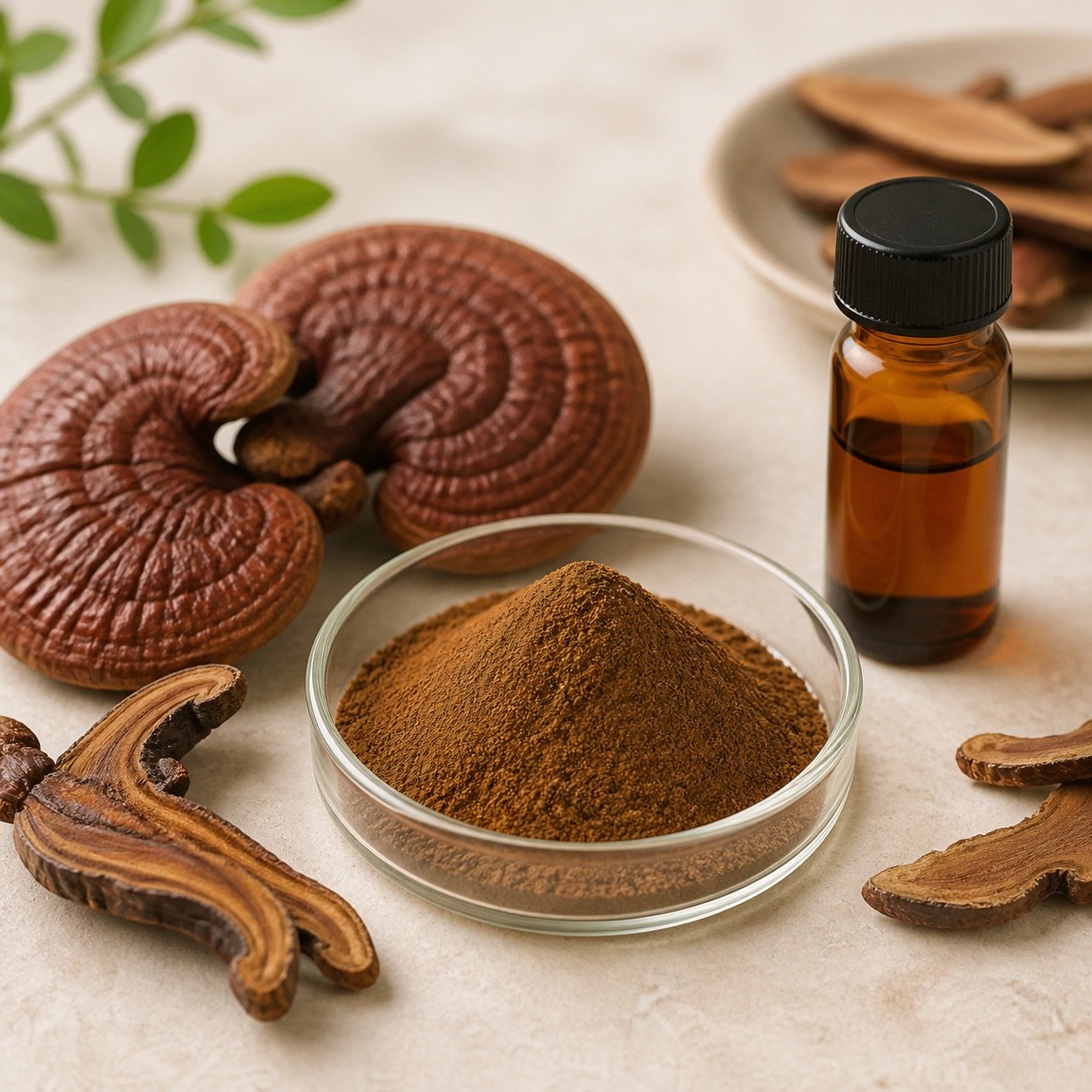
Mushroom powder is made by drying and milling the whole mushroom (typically the fruiting body). It keeps the full spectrum of the raw material, but the concentration of specific actives is low and can vary with the growing substrate and batch.
Mushroom extract uses water or ethanol (or both) to concentrate soluble compounds — most often polysaccharides and beta-glucans — and is typically dried to a powder that can be standardized to a marker level. Extracts also allow you to avoid the heavy mycelium-on-grain starch that some powders contain.
What Beta-Glucans and Polysaccharides Mean on a COA
- Beta-glucans are the structural polysaccharides most often associated with immune-support research; they are the marker most buyers ask about.
- Total polysaccharides is a broader number and is not the same as beta-glucans. If your claim depends on beta-glucans, request a beta-glucan assay, not just total polysaccharides.
- Extract ratio (e.g., 8:1, 10:1) describes input to output, not marker content — always ask for the assayed marker value as well.
Extract vs Powder: Decision Factors
- Dosage and capsule size: extracts allow a smaller serving size and simpler capsules; powders need larger doses.
- COGS and price point: extracts cost more per kilo but you use less; compare cost per serving, not per kilo.
- Label and claim: a standardized extract lets you support consistent marker levels; whole powder is easier to describe as “whole mushroom” if that is your positioning.
- Fruiting body vs mycelium: clarify which part is used and whether grain is present — this affects the composition of both powders and extracts.
Sourcing Checklist for Mushroom Ingredients
- Batch-specific COA with the marker you care about (e.g., beta-glucans or polysaccharides) and the assay method.
- Botanical identity (species, e.g., Reishi / Ganoderma lucidum) and country of origin.
- Fruiting body vs mycelium statement, and whether mycelium was grown on grain.
- Third-party test results for heavy metals and microbiology.
- Certifications: organic (USDA/EU), halal, kosher, non-GMO, GMP.
- MOQ, sample policy, and lead time.
FAQ
Is mushroom extract stronger than mushroom powder?
Extracts are more concentrated per gram and can be standardized to markers such as beta-glucans. “Stronger” depends on your dose and claim; compare cost and active content per serving rather than per gram.
Should I use fruiting body or mycelium?
Clarify the part used and how mycelium was grown. Fruiting-body extracts are the common choice for supplement positioning; if mycelium is used, check whether grain starch is present and disclosed.
What does 10:1 extract mean?
It means ten units of raw material went into one unit of extract. It is an input ratio, not an assay — always ask for the marker value on the COA.
Can I get organic mushroom extract with documentation?
Yes — request the organic certificate, batch-specific COA, and MSDS together with your sample so your documentation set is complete before bulk ordering.
Request a mushroom extract or powder sample and compare the COA markers before you commit to a format.
Related Guides
Time-to-Market Calculator: Pre-made Bases vs. Traditional OEM
| Development Phase | Estimated Days |
|---|---|
| Total Time-to-Market | |
| Minimum Order Quantity (MOQ) |