
Centella Asiatica Extract
Gotu Kola · Cica Extract · Madecassoside / Asiaticoside
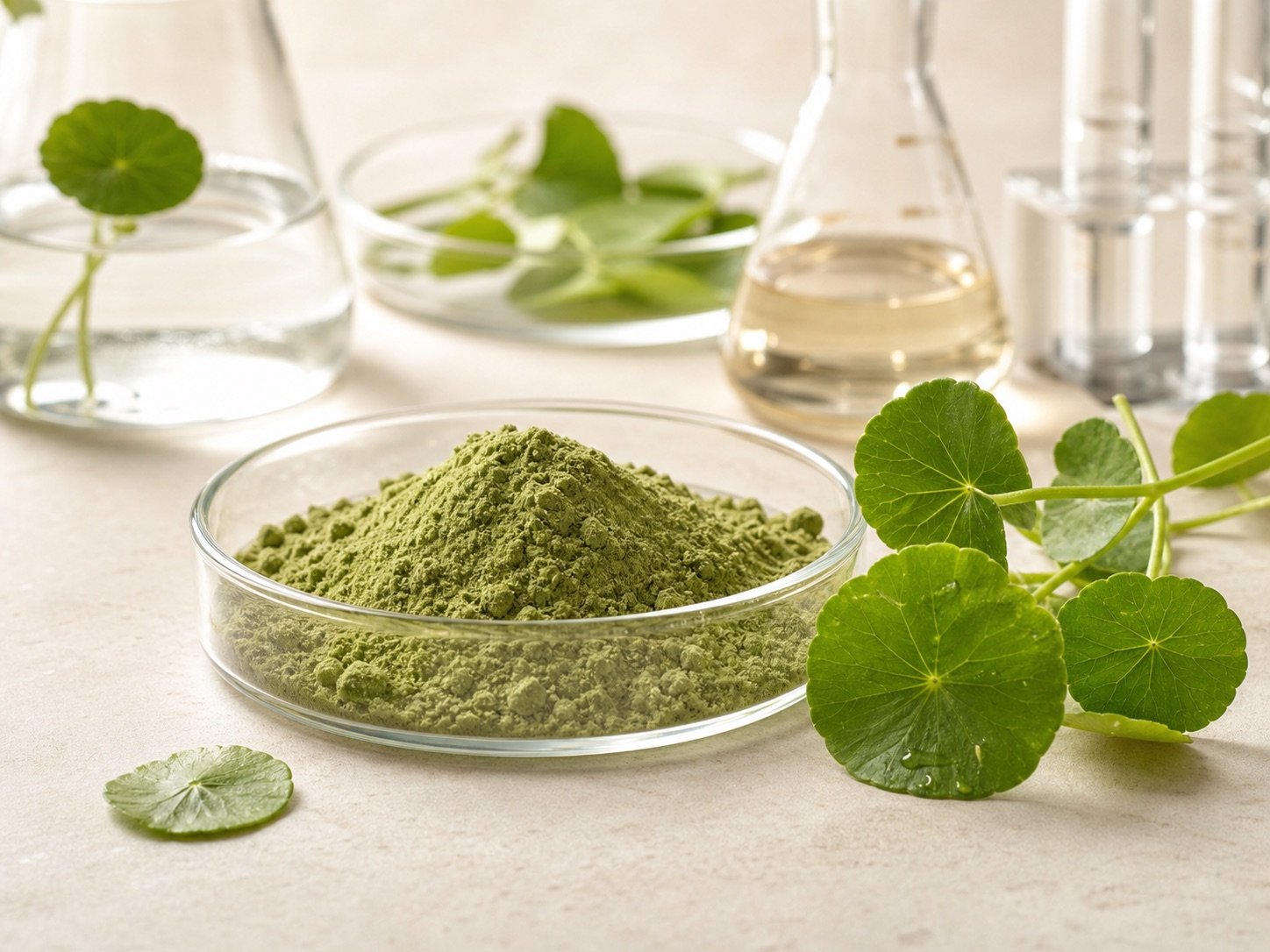
Centella Asiatica Extract is one of the most recognized botanical ingredients in modern skincare, especially in K-beauty inspired “cica” formulas. It is used by brands developing barrier-repair creams, calming serums, sensitive skin products, after-sun care, post-treatment skincare, acne-prone skin formulas, and daily moisturizers positioned around soothing, recovery, and skin comfort. For indie cosmetic brands, centella is valuable because consumers already understand the ingredient name and actively search for it on product labels.
Get a sample
Request a Sample →Product Specifications
| Botanical Name | Centella asiatica (L.) Urb. |
| Common Names | Gotu Kola · Cica · Tiger Grass · Indian Pennywort |
| INCI Name | Centella Asiatica Extract / Centella Asiatica Leaf Extract (depends on grade) |
| Key Actives | Asiaticoside · Madecassoside · Asiatic Acid · Madecassic Acid |
| Available Specs | 10:1 extract · 20% / 40% total triterpenes · Madecassoside 90% · Asiaticoside 95% available |
| Appearance | Brown to greenish-brown fine powder; liquid grades available on request |
| Solubility | Water-dispersible for standard extract; high-triterpene grades require formulation testing |
| Typical Use Level | 0.1%–1.0% for standard extract; lower levels for purified actives depending on formula |
| MOQ | 1kg powder grade (sample from 20g available) |
| Bulk Lead Time | 10–15 business days; custom liquid grades 15–20 business days |
| Shelf Life | 24 months from manufacture date |
| Storage | Cool, dry place. Sealed container. Protect from light, heat, and moisture. |
| Available Certifications | GMP · ISO · Vegan · Non-GMO · Halal · COSMOS-supporting documents on request |
Cosmetic claims: Centella Asiatica Extract is suitable for cosmetic positioning around soothing, skin comfort, barrier support, and sensitive skin care. Avoid disease-treatment language such as wound healing, eczema treatment, burn treatment, or medical recovery unless your finished product is registered under the correct regulatory pathway.
EU / UK market: Use the correct INCI name based on the supplied grade and carrier system. Final compliance depends on your finished formulation, product safety assessment, preservative system, allergens, and Product Information File. We can provide COA, MSDS, specification sheet, allergen statement, heavy metal data, and microbiology results to support your cosmetic safety documentation.
Frequently Asked Questions
For most skincare formulas, standard Centella Asiatica Extract or a 10:1 extract is the best starting point because it gives a familiar INCI name, good marketing value, and manageable cost. If your brand wants to position the product around “active cica” performance, a standardized triterpene grade such as 20% or 40% total triterpenes is stronger. For premium serums or dermatologist-facing products, purified madecassoside or asiaticoside grades can be used, but they require tighter formulation work and a higher ingredient budget.
Centella Asiatica Extract is the broad botanical extract and may contain a natural mix of flavonoids, tannins, saponins, and triterpenes. TECA usually refers to a titrated extract of Centella asiatica with a higher level of triterpene compounds. Madecassoside and asiaticoside are individual marker compounds that can be standardized or purified. In simple terms: Centella Extract is best for broad botanical positioning, TECA is best for active-focused skincare, and madecassoside / asiaticoside are best when your formula needs a specific marker compound on the COA.
Standard powdered centella extract is usually water-dispersible rather than perfectly water-soluble, which is acceptable for creams, gels, masks, and opaque serums. High-triterpene grades and purified actives may need glycerin, propanediol, butylene glycol, ethanol, or another suitable solubilization approach depending on the final formula. If you are making a clear toner or transparent serum, tell us your solvent system and target pH before ordering so we can recommend the correct grade.
For basic extract grades, the COA may list extract ratio, appearance, moisture, ash, heavy metals, microbiology, and pesticide screening if requested. For standardized grades, the key markers are usually asiaticoside, madecassoside, asiatic acid, madecassic acid, or total triterpenes. If your product page or label plans to mention a specific active, make sure that active is tested and shown on the COA. This avoids the common problem where a brand markets “madecassoside” but only buys generic centella extract with no marker assay.
“Cica” is widely used in skincare marketing as a consumer-friendly term for centella-focused formulas. It is usually acceptable as cosmetic positioning, but your claims still need to stay cosmetic rather than medical. Safer wording includes “helps comfort skin,” “supports the skin barrier,” “for sensitive-looking skin,” and “soothing care.” Avoid implying that the ingredient treats wounds, burns, eczema, dermatitis, or other medical conditions unless your finished product has the required regulatory status.
Every sample and bulk order includes COA, MSDS, and product specification sheet. Depending on your market and formula needs, we can also provide allergen statement, Non-GMO statement, vegan statement, heavy metal test data, microbiology results, pesticide screening, flow chart, and country of origin declaration. Third-party test reports from SGS, Eurofins, or other labs can be arranged on request for bulk orders.
Yes, it can. Standard centella extract is typically brown to greenish-brown and may bring a mild herbal odor. In creams, masks, and opaque products this is usually easy to manage. In clear toners, light gel serums, or fragrance-free sensitive skin products, color and odor matter more. If you need a low-color or low-odor grade, mention this when requesting a sample so we can avoid sending a grade that looks strong on paper but creates problems in the finished formula.
Centella is a plant-derived ingredient and fits well in natural-positioned skincare, but the final “natural,” “clean,” or COSMOS-style positioning depends on extraction solvent, carrier, preservative system, and the finished formula. Powder grades are often easier for natural positioning. Liquid extracts may contain glycerin, propanediol, butylene glycol, or preservatives, so the full composition should be checked before making clean beauty claims.
Centella is a botanical raw material, so professional buyers should not only ask for the active marker assay. Heavy metals, pesticide residues, microbiology, and solvent residues matter just as much, especially for sensitive skin products and EU-bound cosmetic formulas. We provide heavy metal and microbiology data as standard, and pesticide screening can be supplied based on your target market and certification requirements.
Minimum bulk order for powder grade is 1kg, with small samples available from 20g for formulation testing. Pricing improves at 5kg, 10kg, and 25kg+ tiers. High-purity madecassoside, asiaticoside, or TECA-style grades are priced differently from standard extract, so it is best to request pricing by both specification and annual forecast volume. If you are still in development, start with a sample and small pilot order before locking the bulk spec.
Available documentation
Related ingredients
🌿 Formulation note
Centella is easy to market but specification-sensitive. Ask for the COA marker compounds before you build claims around madecassoside, asiaticoside, or total triterpenes.
Ready to sample Centella Asiatica Extract?
Tell us your target formula type, preferred INCI, active marker requirements, and target market. We’ll recommend the right centella grade and ship your sample within 2–3 business days.
Request a Sample →Time-to-Market Calculator: Pre-made Bases vs. Traditional OEM
| Development Phase | Estimated Days |
|---|---|
| Total Time-to-Market | |
| Minimum Order Quantity (MOQ) |