
Grape Seed Extract
Vitis vinifera · OPC / Proanthocyanidins · Antioxidant Botanical Extract
Grape Seed Extract is used by cosmetic brands developing antioxidant serums, anti-aging creams, brightening-positioned products, hair and scalp formulas, eye creams, and clean beauty products built around polyphenol-rich botanicals. It is a familiar ingredient to both supplement and skincare consumers, which makes it useful for brands that want an ingredient story around antioxidant protection, plant polyphenols, and skin vitality.
Get a sample
Request a Sample →Product Specifications
| Botanical Name | Vitis vinifera L. |
| Plant Part | Seed |
| INCI Name | Vitis Vinifera (Grape) Seed Extract |
| Key Actives | Proanthocyanidins · Oligomeric Proanthocyanidins (OPC) · Polyphenols |
| Available Specs | 95% proanthocyanidins · 95% polyphenols · OPC 40% / 60% / 95% available |
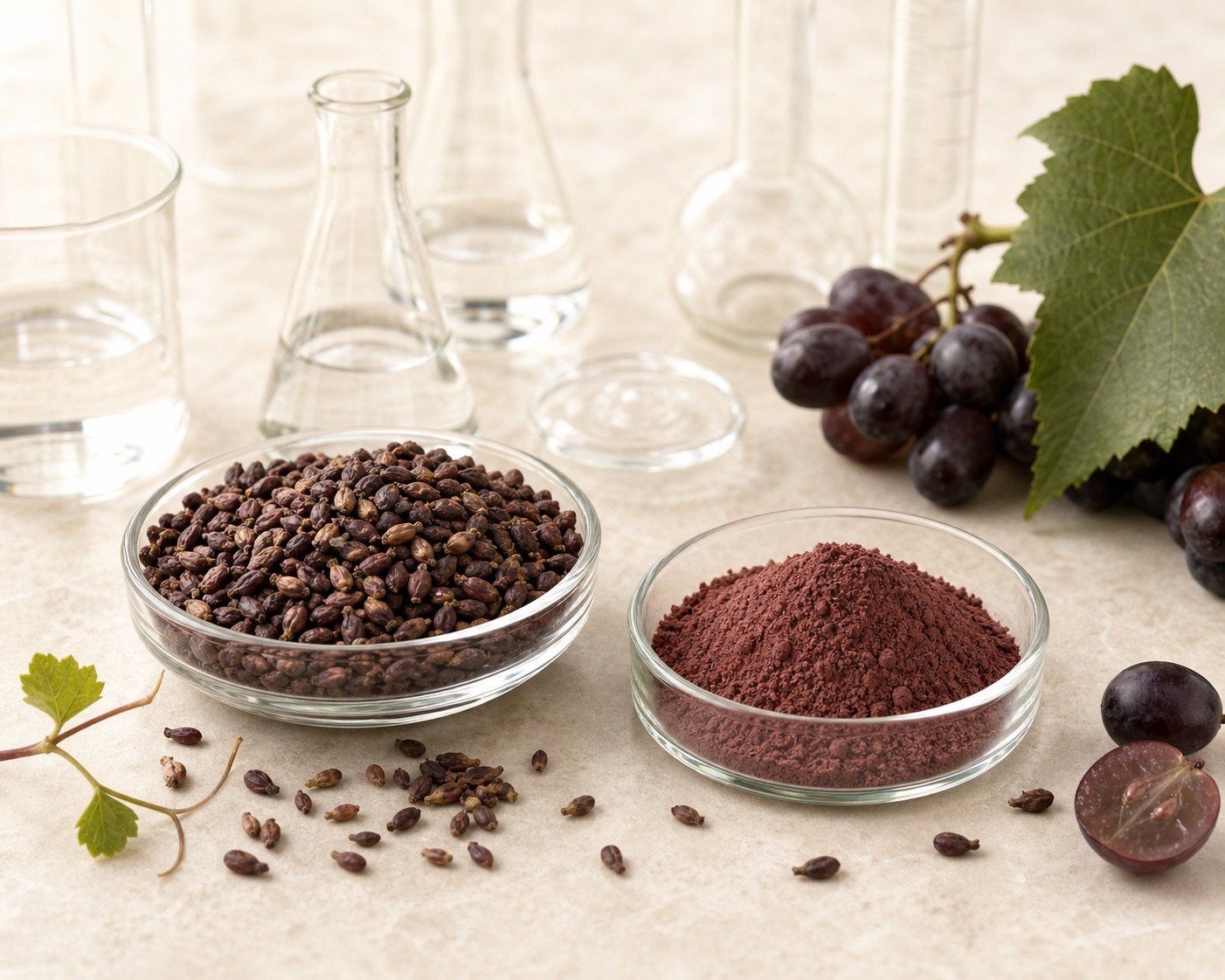
| Appearance | Reddish-brown to brown fine powder |
| Solubility | Water-dispersible; solubility depends on polyphenol grade and solvent system |
| Typical Use Level | 0.1%–1.0% in cosmetic formulas |
| MOQ | 1kg (sample from 20g available) |
| Bulk Lead Time | 10–15 business days |
| Shelf Life | 24 months from manufacture date |
| Storage | Cool, dry place. Sealed container. Protect from light, heat, and moisture. |
| Available Certifications | GMP · ISO · Vegan · Non-GMO · Halal documentation available |
Cosmetic claims: Grape Seed Extract is suitable for cosmetic positioning around antioxidant care, skin radiance, visible signs of aging, and environmental stress support. Avoid drug-style claims such as treating oxidative disease, vascular conditions, pigmentation disorders, or inflammatory skin disease.
Formulation note: High-polyphenol grape seed grades can affect formula color and may interact with metal ions or some polymer systems. For clear serums, pale creams, or fragrance-free products, test color, odor, pH stability, and preservative compatibility before approving the bulk grade.
Frequently Asked Questions
Polyphenols is the broad category. Proanthocyanidins are a major group of grape seed polyphenols. OPC refers to oligomeric proanthocyanidins, the smaller-chain fraction often used as a premium marker. A COA that says “95% polyphenols” is not identical to “95% OPC.” If your marketing or formula specification mentions OPC, make sure the COA method and marker match that claim.
For general antioxidant skincare, 95% proanthocyanidins or 95% polyphenols is usually enough. For premium formulas or brands that specifically market OPC, request an OPC-standardized grade. If you are making a pale cream or clear serum, do not choose only by active percentage; ask for sample testing because higher-polyphenol grades can bring stronger color.
Most grape seed extract powder is water-dispersible and can be incorporated into aqueous phases, but clarity depends on grade, concentration, pH, and electrolyte load. It is usually easy in creams, masks, lotions, and darker serum formats. For fully transparent toners or clear gels, formulation testing is needed because polyphenols may create haze, sediment, or color shift.
Yes, it can. Grape Seed Extract is naturally reddish-brown to brown, and the color may be visible in white creams or clear products. This is one of the most important practical questions for cosmetic buyers. If your product must stay white or transparent, request a small sample first and test it in the actual base before approving the bulk order.
Yes. Grape Seed Extract is commonly used in antioxidant-positioned hair masks, scalp serums, shampoos, and conditioners. In rinse-off products the color issue is usually easier to manage. In leave-on scalp serums, check solubility, odor, preservation, and possible staining on light-colored packaging or applicators.
At minimum, ask for COA, MSDS, specification sheet, heavy metal data, and microbiology results. For EU or premium clean beauty projects, pesticide screening and allergen statements are also useful. If your product will mention OPC or proanthocyanidins, the marker assay and testing method should appear clearly on the COA.
Grape seed extract is plant-derived and fits well in natural-positioned skincare. Many brands also like the upcycled story because grape seeds are associated with wine and juice production side streams. Whether you can make an upcycled claim depends on your exact supply chain documentation, origin statement, and certification requirements. Tell us what claim you plan to make so we can confirm supporting documents.
Grape Seed Extract itself is not a preservative. In finished products, it should be treated as a botanical raw material that may add nutrients and color to the system. Your final formula still needs a validated preservative system and challenge testing. Microbiology results on the raw material help reduce risk, but they do not replace finished product testing.
Conceptually, grape seed extract pairs well with vitamin C, niacinamide, green tea extract, resveratrol, and other antioxidant ingredients. The final decision depends on pH, color stability, metal chelation, and packaging. Polyphenols can be sensitive to oxidation, so antioxidant support and air-limiting packaging may improve formula stability.
Minimum bulk order is 1kg, with formulation samples available from 20g. Pricing improves at 5kg, 10kg, and 25kg+ tiers. OPC-standardized grades generally cost more than broad polyphenol grades. Share your target marker, formula type, and annual forecast so we can quote the right grade.
Available documentation
Related ingredients
🍇 Color note
Grape seed is powerful for antioxidant positioning, but it can bring visible brown-red color. Always test it in your actual base before confirming a clear or white formula.
Ready to sample Grape Seed Extract?
Tell us whether you need proanthocyanidins, polyphenols, or OPC standardization, plus your formula type and target color. We will recommend the right grape seed grade and ship your sample within 2–3 business days.
Request a Sample →Time-to-Market Calculator: Pre-made Bases vs. Traditional OEM
| Development Phase | Estimated Days |
|---|---|
| Total Time-to-Market | |
| Minimum Order Quantity (MOQ) |