
Haematococcus Pluvialis Extract Supplier for Natural Astaxanthin
Source Haematococcus pluvialis extract, natural astaxanthin oil, and astaxanthin powder for supplement, softgel, functional food, and cosmetic projects. BotaNexus helps buyers compare assay, oil or powder format, carrier system, stability, COA, MSDS, and export documents.
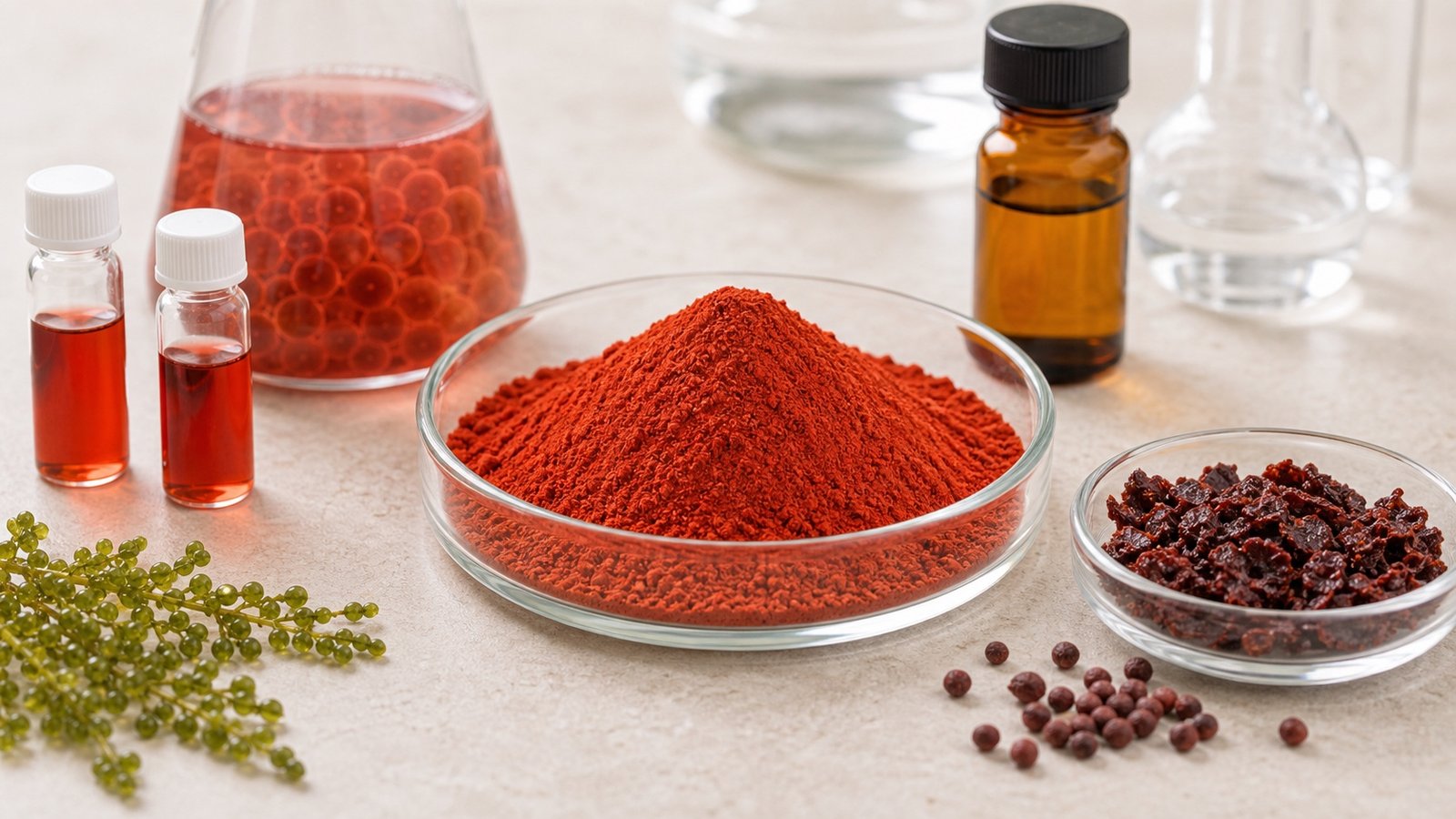
Natural astaxanthin sourcing notes
Haematococcus pluvialis astaxanthin and astaxanthin natural astaxanthin searches usually come from buyers comparing algae-derived material with synthetic alternatives. Confirm source, assay basis, ester profile, carrier, stability, and finished-product format before approving bulk supply.
Source identity
Confirm Haematococcus pluvialis source and whether the material is algae-derived natural astaxanthin.
Format fit
Astaxanthin oil may fit softgels and oil systems; powder formats need carrier, dispersibility, color, and stability checks.
Assay and stability
Review astaxanthin percentage, test method, oxidation controls, packaging, light sensitivity, and shelf-life handling.
Market use
For supplement, food, and cosmetic projects, align documents and claims with the destination market before launch.
What to confirm before buying bulk Haematococcus Pluvialis Astaxanthin
Where natural astaxanthin is used
Natural astaxanthin from Haematococcus pluvialis is used in antioxidant-positioned supplements, softgels, beauty-from-within products, functional foods, beverages, and cosmetic concepts. Format choice matters because oil, powder, and beadlet systems behave differently.
Request the right document packet
For samples and bulk quotes, request COA, MSDS, specification sheet, heavy metals, microbiology, allergen statement, non-GMO status, organic certificate when applicable, and third-party lab testing when required by your market.
Common buyer questions
It is an algae-derived extract commonly used as a natural astaxanthin source. For sourcing, confirm format, assay, carrier, stability, and documents.
Astaxanthin oil often suits softgels and oil-based systems. Powder formats may be used for capsules, tablets, drink powders, or foods, but carrier and stability must be reviewed.
Request COA, MSDS, specification sheet, assay method, heavy metals, microbiology, residual solvents when relevant, and stability or packaging guidance.
It may be used in cosmetic concepts depending on grade and market rules. Confirm solubility, color, stability, INCI expectations, and regulatory fit before launch.
Need bulk Haematococcus Pluvialis Astaxanthin?
Tell us whether you need astaxanthin oil, powder, or beadlet material, plus target assay, format, sample quantity, and destination market. We will match the grade and documents.
Request Sample Documents →Time-to-Market Calculator: Pre-made Bases vs. Traditional OEM
| Development Phase | Estimated Days |
|---|---|
| Total Time-to-Market | |
| Minimum Order Quantity (MOQ) |