
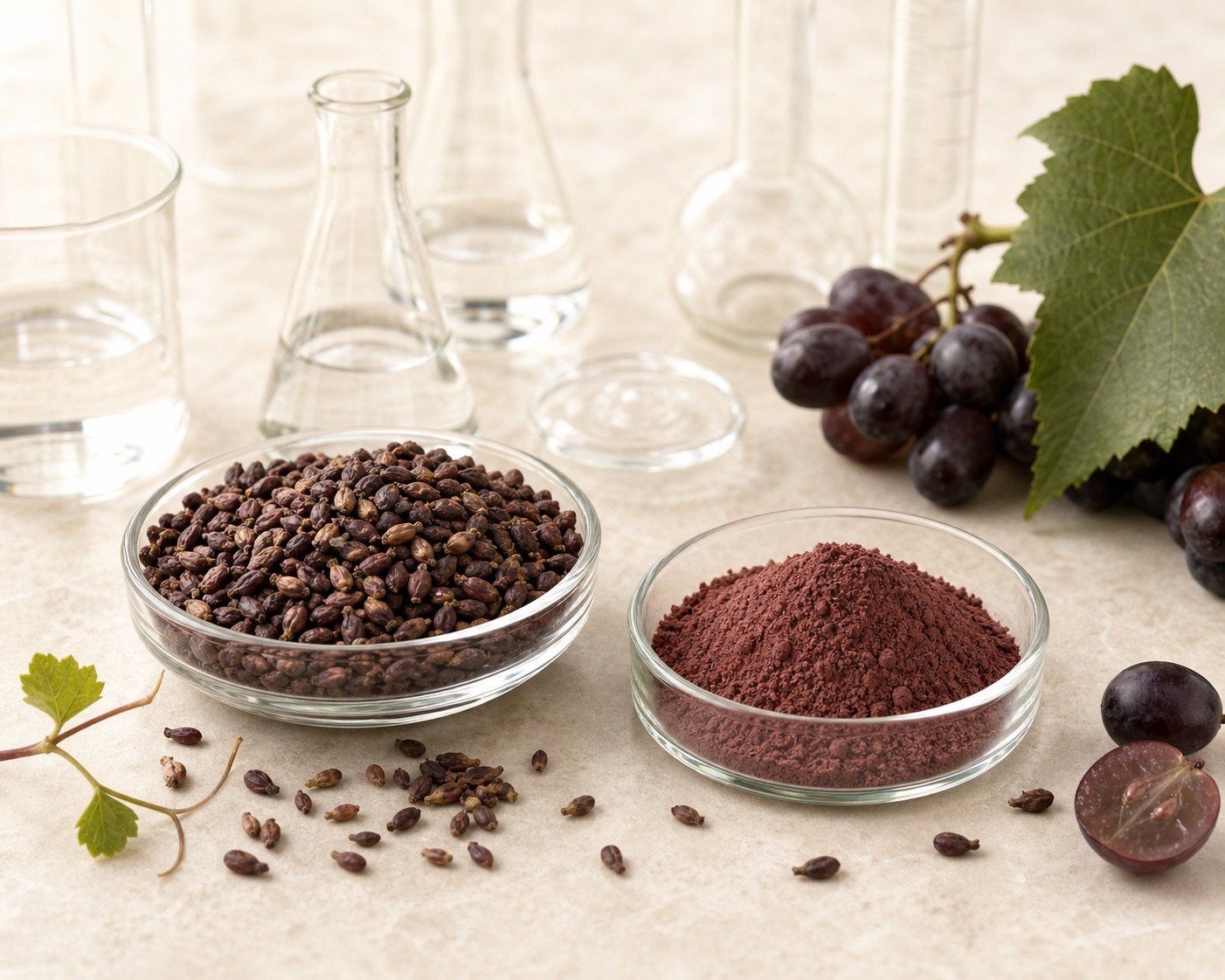
Grape Seed Extract OPC
Vitis vinifera · 95% OPC · Antioxidant Polyphenol Extract
Grape Seed Extract OPC is used by supplement brands developing antioxidant formulas, cardiovascular wellness products, beauty-from-within supplements, healthy aging blends, circulation support products, capsules, tablets, and drink powders. It is a flexible polyphenol ingredient with strong cross-category appeal.
Get a sample
Request a Sample →Product Specifications
| Botanical Name | Vitis vinifera L. |
| Plant Part / Source Material | Seed |
| Key Actives | Oligomeric proanthocyanidins (OPC) · Polyphenols |
| Available Specs | 95% OPC · 80% polyphenols · low-residue grades available |
| Appearance | Reddish-brown fine powder |
| Testing Method | UV or HPLC depending on OPC / polyphenol method and grade |
| Typical Use Level | 50–300mg per serving depending on OPC content and formula positioning |
| MOQ | 1kg (sample from 20g available) |
| Bulk Lead Time | 10–15 business days |
| Shelf Life | 24 months from manufacture date |
| Storage | Cool, dry place. Sealed container. Protect from light and moisture. |
| Available Certifications | GMP · ISO · Vegan · Non-GMO · Halal · Organic available on request |
US market: Grape Seed Extract is commonly positioned for antioxidant support, vascular wellness support, and healthy aging. Avoid claims related to treating cardiovascular disease, hypertension, vein disease, or other medical conditions.
EU / UK market: Antioxidant and circulation-related wording should be reviewed carefully. Keep claims general unless a permitted claim route is available for the finished product.
Frequently Asked Questions
OPC refers to oligomeric proanthocyanidins, a class of grape seed polyphenols. 95% OPC is a common premium specification, but methods can vary. Buyers should check the assay method and avoid comparing quotes only by the headline percentage.
Yes. Grape seed OPC is often used in antioxidant, collagen support, skin beauty, and healthy aging supplements. It also overlaps with cosmetic ingredient positioning, but supplement pages should keep the claim language appropriate for dietary supplements.
Check OPC or polyphenol percentage, method, botanical source, plant part, heavy metals, microbiology, pesticide status, residual solvents, moisture, and ash. For premium exports, ask for third-party testing if the brand needs retailer-ready documentation.
Every sample and bulk order includes COA, MSDS, and product specification sheet. For standardized grades, the COA includes the relevant active marker assay where applicable. Heavy metal data, microbiology results, allergen statement, Non-GMO statement, flow chart, and country of origin declaration are available for bulk orders.
Grape seed pairs well with resveratrol, vitamin C, collagen, hyaluronic acid, green tea, elderberry, bilberry, pine bark, and coenzyme Q10 depending on the formula. For beauty-from-within, it often appears with collagen and vitamin C.
Price depends on OPC percentage, test method, solvent residue requirements, pesticide profile, origin, and annual volume. High-OPC grades with tight residue limits cost more but fit premium channels better.
Minimum bulk order is 1kg, with formulation samples available from 20g. Bulk lead time is usually 10–15 business days depending on selected specification, inventory, documentation requirements, and destination market.
Available documentation
Related ingredients
OPC note
OPC assay methods are not always directly comparable. Ask how the 95% value is tested before comparing suppliers.
Ready to sample Grape Seed Extract OPC?
Tell us your target OPC percentage, residue limits, and market. We will recommend the right grape seed grade and ship your sample within 2–3 business days.
Request a Sample →Time-to-Market Calculator: Pre-made Bases vs. Traditional OEM
| Development Phase | Estimated Days |
|---|---|
| Total Time-to-Market | |
| Minimum Order Quantity (MOQ) |