
Phosphatidylserine
Soy / Sunflower Derived · PS 20% / 50% · Cognitive Lipid Ingredient
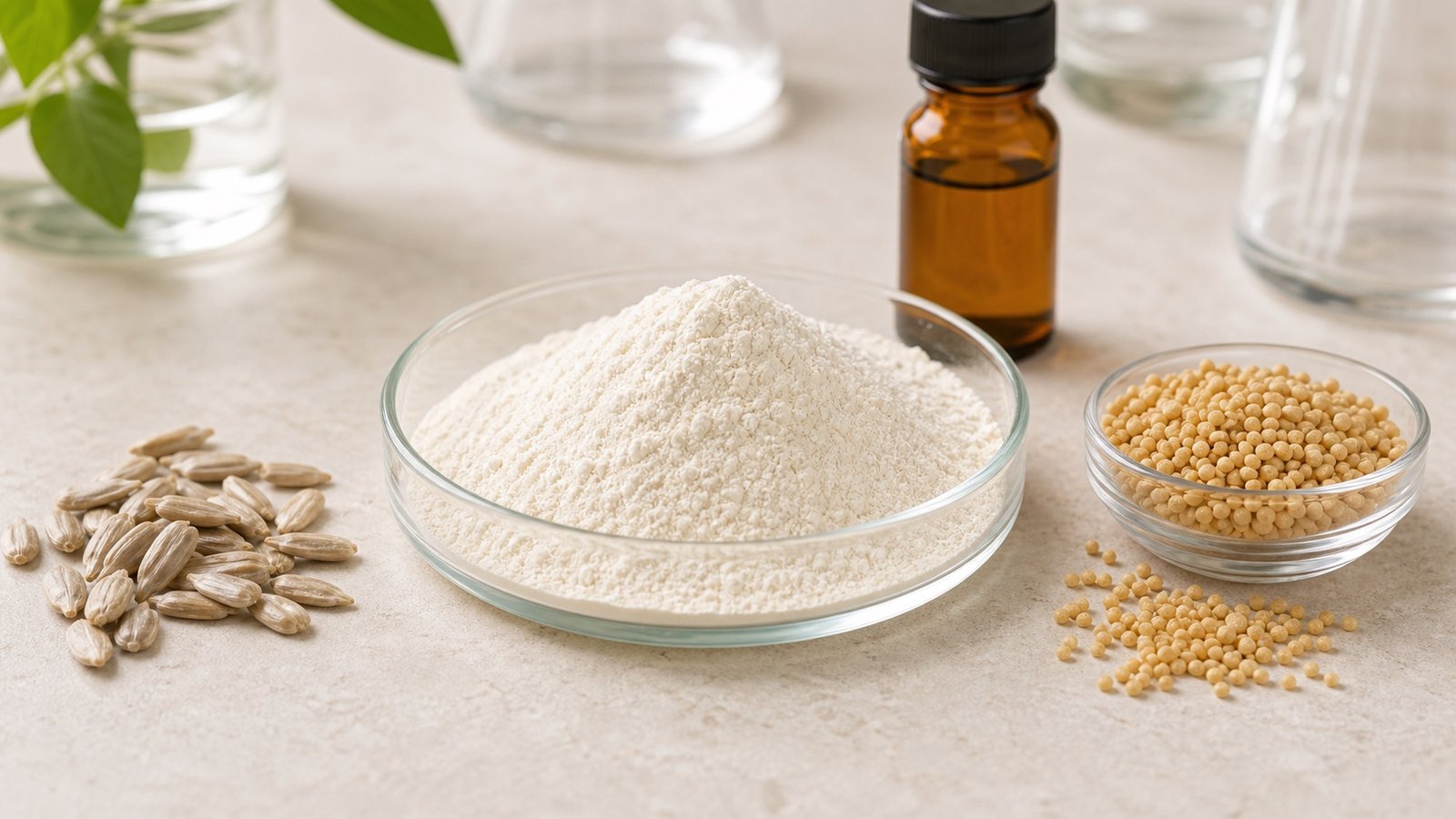
Phosphatidylserine is used by supplement brands developing cognitive support products, memory formulas, healthy aging supplements, sports performance products, nootropic stacks, softgels, capsules, and functional powders. Sunflower-derived grades are especially useful for brands avoiding soy allergens and GMO concerns.
Get a sample
Request a Sample →Product Specifications
| Source | Soy lecithin or sunflower lecithin |
| Plant Part / Source Material | Phospholipid fraction |
| Key Actives | Phosphatidylserine (PS) |
| Available Specs | 20% powder · 50% powder · oil-dispersible and custom grades available |
| Appearance | Light yellow to beige powder |
| Testing Method | HPLC for phosphatidylserine content |
| Typical Use Level | 100–300mg PS per serving depending on product positioning and local review |
| MOQ | 1kg (sample from 20g available) |
| Bulk Lead Time | 10–15 business days |
| Shelf Life | 24 months from manufacture date |
| Storage | Cool, dry place. Sealed container. Protect from light and moisture. |
| Available Certifications | GMP · ISO · Vegan · Non-GMO · Halal · Organic available on request |
US market: Phosphatidylserine is used in cognitive support formulas. US claim language can be sensitive and should be reviewed carefully, especially if referencing qualified health claim language. Avoid claims related to treating dementia or Alzheimer’s disease.
EU / UK market: Cognitive claim wording for phosphatidylserine should be reviewed against local rules. Be especially careful with memory, aging, and disease-adjacent claims.
Frequently Asked Questions
Soy-derived PS is common and cost-effective. Sunflower-derived PS is preferred when brands want soy-free, non-GMO, or cleaner label positioning. If your label says sunflower or soy-free, request source documentation and allergen statements.
20% PS powder is easier for cost-sensitive formulas and larger serving formats. 50% PS is more concentrated and useful for compact capsules, nootropic stacks, and premium products. Compare by active PS delivered per serving.
Check PS percentage, source material, allergen status, solvent residues, heavy metals, microbiology, moisture, and carrier system. For sunflower PS, ask for non-soy and Non-GMO documentation if those claims appear on your label.
Every sample and bulk order includes COA, MSDS, and product specification sheet. For standardized grades, the COA includes the relevant active marker assay where applicable. Heavy metal data, microbiology results, allergen statement, Non-GMO statement, flow chart, and country of origin declaration are available for bulk orders.
Phosphatidylserine pairs well with alpha GPC, bacopa, ginkgo, lion’s mane, L-theanine, omega-3 ingredients, B vitamins, and magnesium. It is also used in sports formulas for focus and stress resilience positioning.
Price depends on PS percentage, source material, carrier, oil or powder format, allergen documentation, and annual volume. Sunflower PS generally costs more than soy PS but supports stronger clean-label positioning.
Minimum bulk order is 1kg, with formulation samples available from 20g. Bulk lead time is usually 10–15 business days depending on selected specification, inventory, documentation requirements, and destination market.
Available documentation
Related ingredients
Source note
For PS, source matters. Soy-derived and sunflower-derived grades can look similar on assay but support different label claims and allergen positions.
Ready to sample Phosphatidylserine?
Tell us whether you need soy-derived or sunflower-derived PS, target percentage, and finished format. We will recommend the right grade and ship your sample within 2–3 business days.
Request a Sample →Soy Lecithin Phosphatidylserine, Sunflower PS and Powder Specs
Phosphatidylserine buyer questions often ask whether the material is soy lecithin phosphatidylserine, sunflower phosphatidylserine, or another PS powder format. This sourcing block helps buyers compare origin, assay, allergen status, and document requirements before requesting samples.
Time-to-Market Calculator: Pre-made Bases vs. Traditional OEM
| Development Phase | Estimated Days |
|---|---|
| Total Time-to-Market | |
| Minimum Order Quantity (MOQ) |